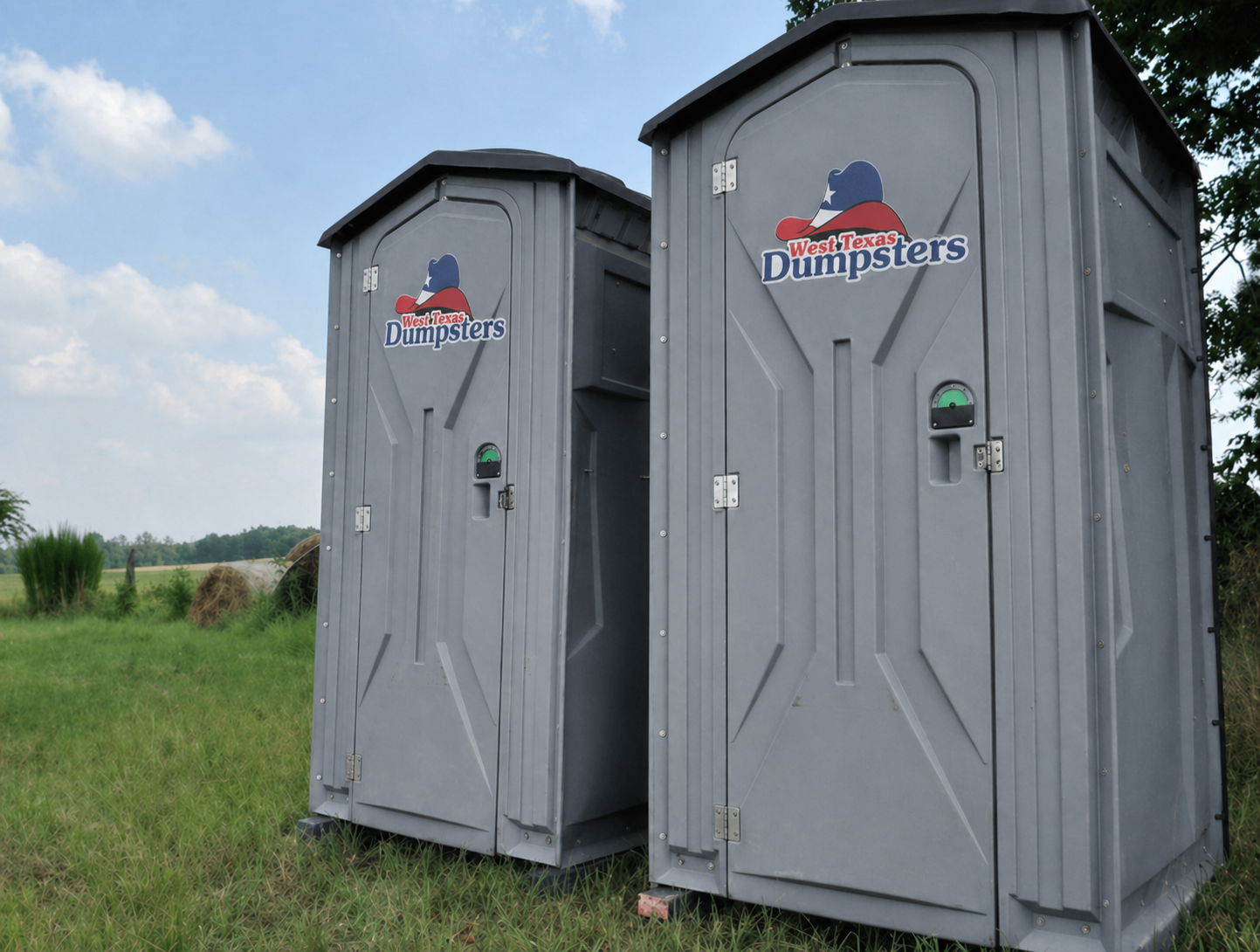
Pipeline spreads in the Permian Basin have a sanitation problem that standard construction sites do not. The crew is mobile, and the work is happening miles from any fixed facility. OSHA still requires toilets, potable water, and handwashing under 29 CFR 1926.51.
The question is how those oilfield portable toilet requirements apply to a crew that is advancing a mile a day across open country. A special rule in the OSHA regulation treats mobile crews differently, and that rule changes the answer.
The governing regulation, OSHA 29 CFR 1926.51, covers sanitation on job sites without access to a sanitary sewer system. That describes nearly every pipeline construction site in the Permian Basin oilfield.
The worker-to-toilet ratio is tiered by crew size. Up to 20 workers, one toilet. From 20 to 199 workers, one toilet seat and one urinal per 40. At 200 or more, that ratio drops to one per 50. These are minimums, not targets. On high-heat Permian jobs where crews are drinking far more water, planning above the minimum is the practical standard.
The regulation also requires potable water supply at the job site. Drinking water must be labeled as potable, provided in a sanitary manner, and kept in containers designed to keep it clean. That requirement does not go away because the crew is mobile.
Handwashing stations fall under paragraph (f) of the same standard, which requires washing facilities for workers engaged in the application of paints, coatings, herbicides, insecticides, or other operations involving harmful contaminants. Pipeline spreads have a coating crew by definition, which brings the job within scope.
OSHA’s restroom and sanitation overview reinforces that facilities must be maintained in a sanitary condition and available when needed. Hand sanitizer alone is generally not a substitute on longer-duration jobs.
Paragraph (c)(4) of the standard contains what is generally called the mobile crew sanitation provision. It states that the toilet facility requirements do not apply to mobile crews that have transportation readily available to nearby toilet facilities. The intent of the provision is to cover situations like municipal utility crews or city road crews who can reach a fixed restroom within a reasonable time.
For a pipeline construction crew working an extended spread across West Texas, that exemption generally does not apply. There are no nearby fixed toilet facilities. The job is advancing a mile or more per day across ranch land and easements, away from any town. The crew cannot realistically reach a fixed facility in the time the standard contemplates.
OSHA addressed this directly in a June 7, 2002 interpretation letter clarifying that “nearby” under paragraph (c)(4) depends on the nature of the site and the job functions of the crew. If the crew cannot reach a nearby facility, the standard ratio requirements apply.
Pipeline jobs end up back under the standard toilet ratio requirement, but the toilets themselves need to move with the crew. This is where transportable toilet facilities come in. Portable toilets staged at the active work front and moved as the spread advances meet the standard for mobile construction crews in remote areas. That is the industry default for Permian pipeline work, and it is the default for a reason.

A typical Permian Basin pipeline spread runs 40 to 80 workers across multiple sub-crews: clearing and grading, trenching, stringing, welding, coating, lowering-in, and backfill. Each sub-crew is often working a different segment of the spread at any given time, which affects how sanitation gets staged.
For a 60-worker spread, the minimum under the ratio is two toilet units. On the ground, a better setup is three to four units distributed across the active work area so no worker is more than a few minutes’ walk from a facility. Handwashing stations pair with the toilets, not in place of them. ADA-compliant portable toilets should be included based on crew composition and any contract-specified accessibility provisions.
Potable water gets staged at shaded points along the spread where crews break. In the Permian summer, water consumption climbs, which means more water stations and more frequent toilet servicing. A unit serviced weekly on a mild-weather job may need servicing two or three times a week during July and August.
Service schedule is the detail that separates a compliant setup from one that falls out of compliance halfway through the job. Portable restroom rental on a pipeline job is not a drop-and-leave service. The vendor needs to track active work fronts, reposition units as the spread advances, and adjust pump-out frequency as conditions change. West Texas Dumpsters builds service schedules around the spread’s advance rate and crew size, not a fixed calendar.
OSHA cites sanitation violations on construction sites regularly, and pipeline projects are not exempt. A compliance officer arriving at an active spread will count units, check water supply and handwashing facilities, and verify that units are being maintained in sanitary condition. Shortfalls generate citations and remedial action requirements, and in serious cases they can prompt broader scrutiny of the job’s safety program.
The cost of under-speccing sanitation is rarely limited to the fine itself. Project schedules tight enough to be at risk of missing an in-service date cannot absorb a mid-job inspection that requires standing up additional units before work continues. Pricing sanitation correctly at the start is almost always cheaper than repricing it after a citation.
A pipeline operator’s sanitation vendor is inside the safety perimeter of the job. The vendor’s trucks are on the lease road, field staff are walking past active welding, and equipment stages in the right-of-way. That makes the vendor effectively part of the operator’s safety program, and most Permian Basin operators require vendor safety credentials at the gate before any work starts.
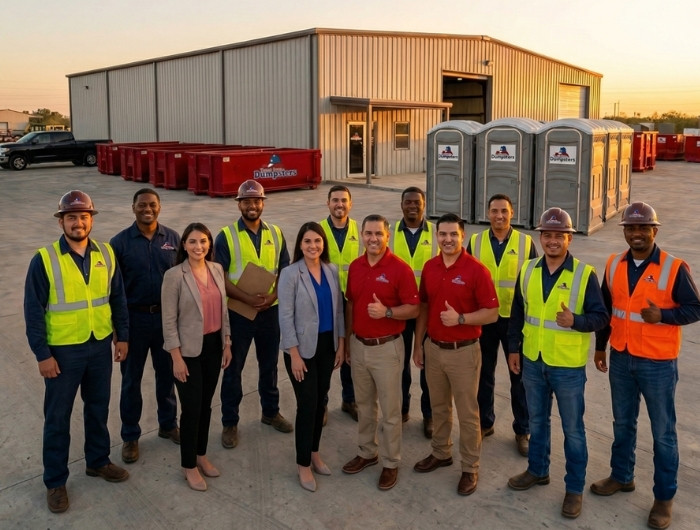
West Texas Dumpsters’ field operations are managed by PEC Certified personnel, which is the standard oilfield safety credential most large operators require. Waste from portable toilet units also has to be transported and disposed of legally, which is where EPA registration matters. West Texas Dumpsters operates under EPA ID TXR000083663 for waste transport authorization.
One vendor for sanitation and roll-off containers on the same job means safety onboarding happens once instead of twice, and there is a single point of contact when a schedule change comes up mid-spread. For a project manager running a spread on a tight timeline, that consolidation is worth the conversation at the quote stage.
Under OSHA 29 CFR 1926.51, the minimum is one toilet for crews of 20 or fewer, one toilet and one urinal per 40 workers for crews of 20 to 199, and one toilet and one urinal per 50 workers for crews of 200 or more. On a pipeline spread, units should be distributed across the active work area, and the count often runs above the minimum for practical access.
Yes for most pipeline spreads. Paragraph (f) of the standard requires washing facilities for workers applying paints, coatings, herbicides, insecticides, or other operations involving harmful contaminants. Pipeline spreads have a coating crew, which puts the job within scope. Hand sanitizer alone is generally not a substitute on longer-duration jobs.
Paragraph (c)(4) exempts mobile crews that have transportation readily available to nearby toilet facilities. For pipeline crews in the Permian Basin, the exemption generally does not apply because there are no nearby fixed facilities. The practical solution is transportable portable toilets that advance with the spread.
Service frequency depends on crew size, weather, and water consumption. A weekly schedule is common for moderate conditions. During the peak Permian summer, service may need to shift to two or three times per week as water usage climbs. West Texas Dumpsters builds service schedules around the specific job rather than a fixed calendar.
For pipeline project managers planning a Permian Basin spread, the sanitation package is not the place to cut corners. Call West Texas Dumpsters at (800) 996-9862 to walk through your project’s crew size, spread length, and timeline. The team will scope unit count, handwashing stations, potable water staging, and service frequency to keep the job in compliance from mobilization through final cleanup.
