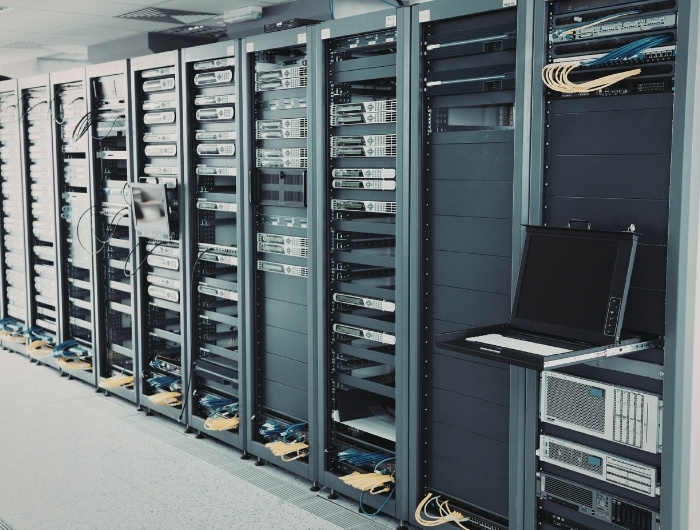
The Permian Basin is no longer just an oilfield. Over the past 18 months, a wave of hyperscale AI campuses has been announced across West Texas, drawn by stranded natural gas, available land, and a permitting environment that lets gigawatt-scale projects break ground in months rather than years. For project managers running these buildouts, crew size, debris profile, sanitation footprint, and service cadence all change three or four times before the building is energized.
This guide covers what the waste profile actually looks like across each construction phase, how portable sanitation scales for crews that can run into the hundreds, why a single full-service provider matters on a project of this size, and what Permian Basin project managers should expect from a credentialed hauler before construction starts.
The scale of what’s being announced is genuinely new for the region. The Texas Critical Data Centers (TCDC) campus near Odessa in Ector County spans roughly 438 acres and is planned as a phased gigawatt-scale development. Chevron has announced a 2.5 gigawatt natural gas power complex in West Texas, expandable to 5 gigawatts. Pacifico’s GW Ranch in Pecos County is permitted at 7.65 gigawatts. According to the Permian Power Conference, seven GW-scale AI hyperscale data center campuses have been announced in West Texas and southeast New Mexico in the past six months alone.
For project managers running these buildouts, the relevant fact is simpler than the policy debate around them: each campus is a temporary industrial city for the duration of construction. Hundreds of workers on site daily.
Multi-month phases that move from earth moving to vertical construction to mechanical fit-out to commissioning. Waste streams that look completely different in month three than in month thirteen. And no fixed infrastructure for sanitation or solid waste capture until the project is nearly complete.
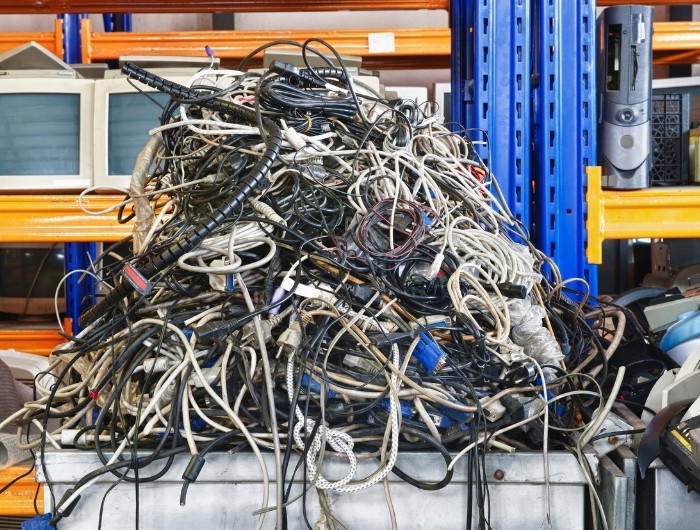
A hyperscale data center buildout generates waste in volumes and categories that don’t map cleanly onto a typical commercial construction project. The waste profile changes by phase, and the right service lineup for one phase is the wrong lineup for the next.
Site prep is dirt-heavy and runs on small numbers of large-volume containers plus portable sanitation for an early crew. Vertical construction is concrete-heavy and steel-heavy, with sanitation and water demand scaling fast as the crew grows.
Fit-out and commissioning generate the highest volume of mixed packaging, electrical, and finish-out debris, with crew sizes peaking and then drawing down toward energization.
A credentialed hauler handles three core categories across all phases: roll-off containers for solid waste, portable sanitation for the workforce, and large quantity holding tanks plus pump out service for the sanitation infrastructure. Sizing and cadence on each shifts by phase.
Site prep on a hyperscale campus runs heavy on earthwork. The visible waste streams are clearing debris (brush, scrub, removed vegetation), excavation soil if any goes off site, and the early footprint of construction packaging from temporary office trailers, equipment staging, and the first deliveries of structural material. Crew size is typically smaller than later phases, often in the dozens rather than the hundreds.
Service requirements during site prep: a small number of 40 yard roll-offs for general clearing debris and packaging (light, high-volume material). Portable toilets sized to the early crew, typically following the OSHA 1926.51 ratio of one toilet per 20 workers, with handwashing stations at the work front. A single large quantity holding tank with weekly pump out cadence is usually adequate for the early-phase footprint.
This phase looks deceptively simple, but it’s where the service contract gets signed for the entire buildout. Picking a hauler that can scale from this footprint to a peak crew of several hundred without changing providers is what makes the difference later.
Vertical construction is when the waste profile and the crew expand fast in parallel. Concrete pours for foundations, slabs, and structural elements generate substantial concrete debris from forming, cutting, and rework. Steel erection adds rebar offcuts, banding, and packaging. Mechanical, electrical, and plumbing (MEP) rough-in starts adding cardboard packaging, conduit offcuts, scrap pipe, and wire trim at a steady cadence.
Two operational facts shape this phase. First, concrete and masonry debris is weight-limited, not volume-limited. The 10 ton DOT haul weight applies to all roll-off sizes, and a 30 yard container of concrete debris hits that ceiling at roughly five cubic yards. Sizing the disposal cadence around concrete-heavy phases means smaller containers (20 yard or 30 yard) on a swap schedule, not single 40 yards trying to hold the volume. Full sizing logic is covered in the construction dumpster sizing guide.
Second, crew size scales sanitation demand non-linearly. A crew that grows from 50 to 250 doesn’t just need five times the toilets. It needs a new pump out cadence (often daily rather than weekly), additional handwashing stations distributed across an expanding work footprint, and water supply that can keep up with hot weather demand on a site without permanent plumbing. WTD’s large-crew service lineup, including large quantity holding tanks and battery-operated pumps for sites without an energy source, is the same equipment used on Permian Basin pipeline and oilfield work.
Service requirements during vertical construction: multiple roll-offs in 20, 30, and 40 yard sizing distributed across the active work footprint, with swap cadence ranging from daily during heavy concrete weeks to weekly during slower phases. Portable toilets distributed across the site. Daily pump out service on the holding tanks. Non-potable water supply sized to crew demand.
Fit-out is when mixed light-density debris peaks. Electrical fit-out generates large amounts of cable packaging, conduit offcuts, and wire trim. Mechanical fit-out adds insulation scraps, ductwork packaging, and HVAC component packaging. Server hall fit-out brings the highest cardboard volume of the entire project, with shipping crates and packaging from mechanical and electrical equipment.
The crew profile shifts. Specialized trades (electricians, low-voltage technicians, controls technicians, commissioning staff) replace much of the structural workforce. Total headcount may peak at the start of fit-out and draw down through commissioning. The sanitation footprint stays heavy through this phase even as the crew composition changes.
Service requirements during fit-out and commissioning: heavy use of the 40 yard roll-off for high-volume light-density packaging debris. Continued portable sanitation across the site, with cadence adjusted for actual headcount. Pump out service moves from daily back toward semi-weekly as the crew draws down. Large quantity holding tanks remain in service through commissioning.
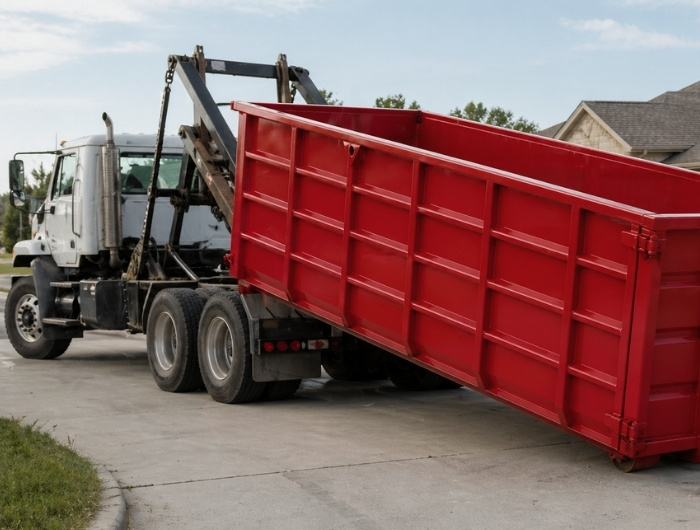
The standard alternative on a project this size is to hire two or three vendors: one for solid waste, one for portable sanitation, and a separate water supply contractor. That works at smaller scale. On a hyperscale campus, it creates coordination problems that show up in the schedule.
When solid waste is a separate vendor from sanitation, the project manager owns the integration: every cadence change, every phase transition, every surge week requires coordinating two billing relationships, two dispatch schedules, two compliance trails, and two sets of insurance certificates. WTD provides the full lineup under one provider: roll-off containers in 20 yard, 30 yard, and 40 yard sizing, portable toilets and ADA units, large quantity holding tanks, daily pump outs, and non-potable water supply. The full lineup is the same one WTD uses for Permian Basin man camps supporting oilfield crews of comparable size, the closest operational analog to a hyperscale construction site.
Standard commercial construction debris is straightforward. The credential question gets pointed when a hyperscale construction site touches anything outside that. Tank pad demolitions during site prep can surface contaminated soil. Industrial-adjacent buildouts can generate sandblast residue from coating work. Older site reuse can carry asbestos in pre-existing structures. Each of those needs a hauler with the right credentials before the load can move.
WTD holds the EPA ID (TXR000083663), the Railroad Commission of Texas registration (RN109046839), the Texas IHW Transporter License (SWR 96263), a contaminated soil hauling license, and PEC certification on operations managers. Disposal routes through TXP’s company-owned Diamondback Landfill in Odessa. The same company that owns the dumpster on site owns the landfill the dumpster is going to. There is no third-party disposal partner in the chain of custody. For non-standard waste streams, the contaminated soil disposal process is detailed separately. The same workflow applies to sandblast and other class 1/2 non-hazardous special waste.
Site prep. Once site clearing starts, the first roll-offs and the first portable sanitation units need to be on site, and the service contract should already be signed. Bringing a provider in mid-project means scrambling the sanitation footprint during the busiest construction weeks. WTD prefers to scope the full buildout from site prep through commissioning rather than picking up partial scope mid-project.
It depends on crew size and weather. On a crew of 200 to 400 in West Texas summer heat, daily pump out service is typical. Smaller crews or cooler-season work move toward semi-weekly cadence. WTD scopes pump out frequency to actual headcount and adjusts as the crew scales through each phase, using the same playbook as oilfield man camps of comparable size.
Yes, for class 1 and class 2 non-hazardous classifications. The process starts with TCLP testing on the soil, runs through waste profiling, and ends with disposal under WTD’s RRC contaminated soil hauling license. Full process detail is in the contaminated soil disposal guide. Materials that exceed class 2 require a specialized hazardous waste hauler.
The same way a Permian Basin pipeline or man camp project gets scoped: a master service agreement that covers the full buildout, with cadence and equipment adjusted by phase. Service ramps up through site prep and vertical construction, holds steady through fit-out, and draws down toward commissioning. Billing aligns with actual service delivery rather than fixed monthly amounts.
Midland, Odessa, Ector County, Reeves County, Pecos, Big Spring, and the broader Permian Basin. The TCDC site in Ector County, Chevron’s planned complex, and the Pacifico project in Pecos County all sit inside WTD’s core service footprint.

Hyperscale data center construction in the Permian Basin runs on integrated logistics. The same hauler that drops the first roll-off during site prep should be the one running pump outs at peak crew and the one closing out commissioning containers at energization. WTD provides the full lineup (roll-off containers, portable sanitation, large quantity holding tanks, water supply, and pump out service) under one provider, with full credentials for non-hazardous special waste and disposal through TXP’s company-owned Diamondback Landfill in Odessa. Call (800) 996-9862 or contact the team to scope a project from site prep through commissioning.
