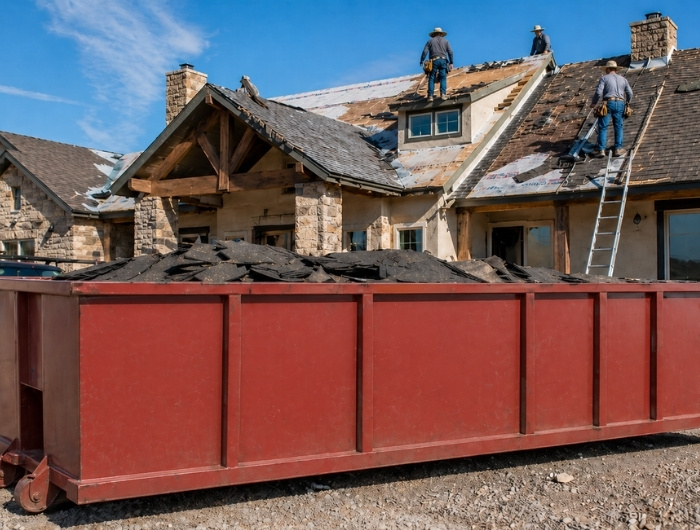
Roofing in West Texas runs on a different rhythm than most construction trades. Tear-offs are heavy, jobs move quickly, and the weather creates demand spikes that don’t show up in most other markets.
This guide covers how Midland and Odessa roofing contractors should size a roll-off for a tear-off, how the West Texas climate drives volume, and what makes the Diamondback Landfill connection a practical advantage when the next storm hits.
The Midland-Odessa market generates roofing demand that runs hotter than the Permian Basin’s population alone would predict, for two reasons that compound. First, sustained heat and UV exposure age asphalt shingles faster in West Texas than in cooler markets.
The combination of long summer sun hours and high surface temperatures shortens the practical lifespan of a 25 year shingle, particularly on south-facing slopes.
Second, hail. West Texas sits inside the Texas hail corridor, and the NOAA Storm Events Database shows the frequency of hail events of one inch or larger across Ector and Midland counties consistently among the higher tiers in the state. A single hail event drives a wave of insurance claims, which drives a wave of tear-offs through the contractors who can mobilize quickly.
Roofing contractors in Midland and Odessa run normal cadence punctuated by 30 to 90 day surges after major storm events.
These patterns shape what roofing contractors actually need from a dumpster rental partner: speed when demand spikes, accurate sizing on every job, and a disposal route that doesn’t bottleneck during surge weeks.
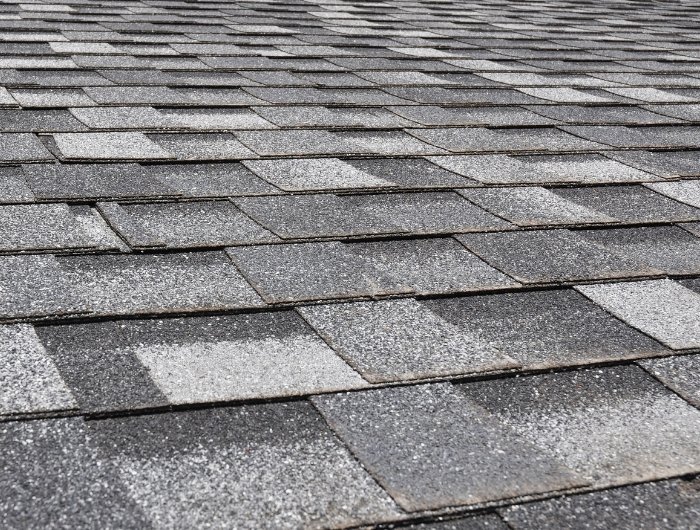
Sizing a roofing dumpster starts with weight, not volume. A square of shingles is 100 square feet of installed roof. The weight of one square depends on the shingle type, but the working ranges are:
A typical tear-off is one to three layers of shingles plus felt, nails, and any flashing or wood sheathing that comes off with them. Two layers of architectural shingles on a 30 square (3,000 square feet of roof) home runs roughly 21,000 to 27,000 pounds before any decking or substrate gets added in. That’s already at or above the 10 ton DOT haul weight limit before the wood goes in.
The implication: shingle tear-offs are weight-limited, not volume-limited. A roll-off filled with shingles will hit the legal haul weight long before the container looks full. Sizing has to account for that.
The legal haul ceiling on any roll-off is 10 tons (20,000 pounds), set by Texas DOT road weight limits. That ceiling applies whether the container is a 20 yard, 30 yard, or 40 yard. The volume rating tells you how much the container holds. The 10 ton limit tells you what you can legally take to disposal.
Working sizes for roofing tear-offs:
The 20 yard roll-off handles roughly 1.5 to 2 layers of shingles on a 25 to 35 square home, depending on shingle type. It’s the right call for a single-layer tear-off on a smaller residential roof or a tight commercial job where site space is constrained. The lower wall height makes loading easier when crews are throwing debris from a roof rather than carrying it.
The 30 yard roll-off is the working default for a typical residential or light commercial tear-off, including most architectural shingle jobs in the 25 to 40 square range. It carries the volume of a multi-layer tear-off without weight running ahead of the hauler.
The 40 yard roll-off is generally oversized for a single-home shingle tear-off because the weight ceiling kicks in long before the volume is used. It earns its keep on commercial roof work, on multi-property tear-off campaigns where the same container services adjacent jobs, or on tear-offs that include substantial wood decking replacement (lighter density per cubic yard, so volume catches up to weight).
When in doubt, sizing two 20 yards or two 30 yards on a swap schedule outperforms one larger container that hits weight at half-full.
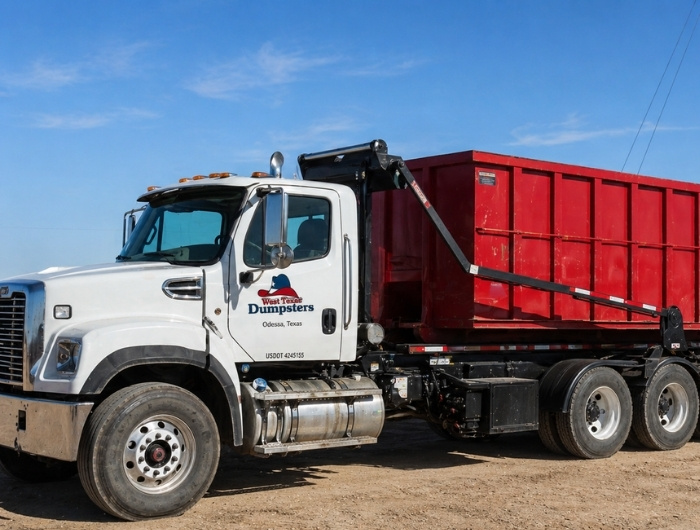
Roofing tear-offs run on a tight schedule. Crews arrive early, the roof has to be dry, and the dumpster needs to be on site before tear-off starts. Same-day or next-day delivery is the operational requirement, not a nice-to-have.
WTD services Midland, Odessa, Ector County, Big Spring, and the surrounding Permian Basin from local yards. Delivery windows for standard sizing are typically same-day or next-day, with availability tied to current dispatch load. After major hail events, when every roofer in the market is calling at once, dispatch capacity matters more than usual.
The disposal side matters too. TXP, the parent company of WTD, owns Diamondback Landfill in Odessa. That vertical integration translates to two practical advantages during hail surge weeks: tighter scheduling control on disposal turnaround (the truck doesn’t sit in line at a third-party landfill), and one company on both ends of the haul.
Most competing haulers in the Permian Basin route to the same regional facilities, which can bottleneck during peak weeks. Diamondback is on the WTD side of that equation.
For most single-family residential tear-offs in the 25 to 40 square range, a 30 yard roll-off is the working default. Smaller homes or single-layer tear-offs can run on a 20 yard. The constraint is weight rather than volume: a square of architectural shingles weighs around 350 to 450 pounds, and the legal haul weight is 10 tons across all roll-off sizes. Call WTD at (800) 996-9862 to walk through your specific job.
Yes. Standard tear-off debris (shingles, felt, underlayment, nails, flashing, wood decking that comes off with the roof) goes in the same roll-off and routes to the same disposal cell. The full list of accepted materials is on the WTD accepted items page.
WTD typically offers same-day or next-day delivery in Midland, Odessa, and the surrounding Permian Basin from local yards. After major hail events, dispatch load is heavier and lead times can extend, so calling early in the surge cycle is the most reliable path. Call (800) 996-9862 to confirm a delivery window.
Single-ply membrane and modified bitumen tear-offs are accepted in standard roll-offs alongside any underlying insulation, fasteners, and substrate that comes off with the roof. Sizing follows the same logic as shingle tear-offs: the heavier the material per cubic yard, the more weight catches up to volume. The 30 yard is the default for most commercial reroof jobs, with the 40 yard reserved for high-volume light-density material.
Hazardous waste, asbestos, refrigerants, paint or solvents, batteries, tires, propane tanks, medical waste, liquid waste, and flammable materials are all prohibited. Older commercial roof systems may contain asbestos in built-up roofing felts or mastics. If asbestos is suspected, a licensed abatement contractor handles the removal and transport separately, not a standard roofing dumpster.

Roofing in Midland and Odessa runs on speed and accurate sizing. WTD handles construction and roofing dumpster rentals across the Permian Basin, with same-day and next-day delivery from local yards and disposal routing through TXP’s company-owned Diamondback Landfill in Odessa. Call (800) 996-9862 or contact the team to get a quote based on your job’s size, layer count, and timeline. After major hail events, calling early in the surge cycle is the most reliable way to lock in delivery.
