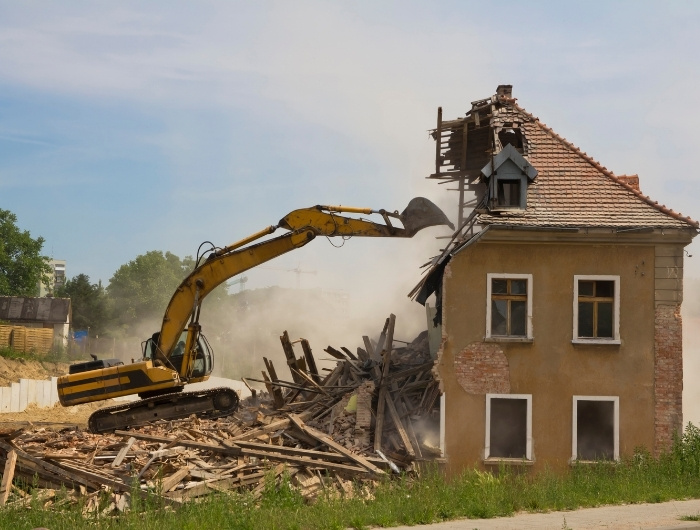
Commercial demolition projects in the Permian Basin generate more weight per cubic yard than almost any other construction work, which makes demolition dumpster rental in the Permian Basin different from a standard construction haul in two specific ways:
Weight controls the sizing decision before volume does, and the material mix determines whether a single hauler can legally handle the disposal.
Demolition debris on a typical Permian Basin commercial job covers concrete (slabs, foundations, pavement), masonry (CMU block, brick, mortar), structural steel and rebar, lumber and framing, drywall, roofing material, fixtures, and ductwork. Most of this is non-hazardous construction and demolition (C&D) debris under TCEQ classification, which means it can ride in a standard roll-off and route to a permitted landfill without special profiling.
The picture changes when demolition touches material that isn’t standard C&D. The most common surprises on West Texas commercial demolitions are sandblast residue from coating removal (especially on industrial and oilfield-adjacent buildings), oily or contaminated soil under demolished pads or tank farms, and asbestos-containing material in older buildings.
Each triggers a separate process: sandblast and contaminated soil require TCLP testing and waste profiling before disposal, and asbestos abatement must be performed by a licensed abatement contractor under TCEQ’s Asbestos NESHAP rules. Standard dumpsters cannot legally accept any of those materials without proper documentation.
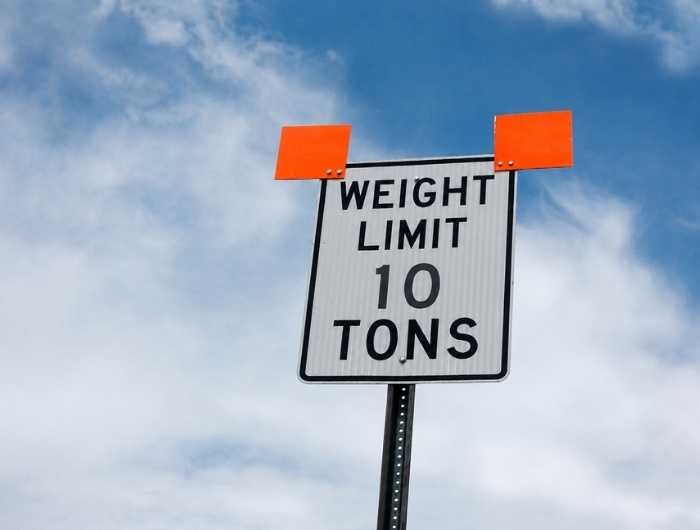
The legal haul ceiling is 10 tons (20,000 pounds) across all roll-off sizes, set by Texas DOT road weight limits. Concrete and masonry are dense enough that the volume of a typical commercial roll-off will outrun that ceiling fast.
A few working numbers from the EPA’s construction and demolition debris data:
A 30 yard roll-off filled with clean concrete debris would theoretically weigh 60 tons, six times the legal haul. In practice, that 30 yard hits its 10 ton ceiling at roughly five cubic yards of concrete. The container looks one-sixth full. It is at weight.
Pick the 20 yard or 30 yard roll-off for concrete-heavy and masonry-heavy phases, and plan on multiple swaps rather than one large container. A swap means WTD picks up the full container, hauls it to disposal, and drops an empty replacement in the same spot. For a slab demo or building takedown, three to five swaps of a 20 yard often outperform one 40 yard, on weight compliance and on site logistics.
The 40 yard roll-off earns its space on the cleanout phase, when the heavy material is gone and what’s left is framing, drywall, packaging, and fixtures. Splitting a demolition into a heavy phase (smaller containers, more swaps) and a light phase (40 yard) is the cleanest way to keep weight inside the legal ceiling without leaving volume on the table.
Most Midland and Odessa commercial demolitions don’t trigger separation requirements, but the ones that do are predictable enough to plan for in advance.
Asbestos. Buildings constructed before roughly 1980 carry a meaningful probability of asbestos in floor tile, mastic, pipe insulation, ceiling tile, roofing felt, and HVAC ductwork. Federal NESHAP rules require an inspection by a licensed asbestos consultant before demolition. If asbestos is identified, abatement happens before the building comes down, and the abatement waste is hauled by an asbestos transporter. Standard demolition dumpsters cannot accept asbestos-containing material.
Lead-based paint. Common in pre-1978 construction. Intact paint riding in C&D debris is generally allowable, but paint chips and concentrated lead waste (such as sandblast residue from removing leaded coatings) require TCLP testing. If hazardous, it’s outside the scope of standard hauling. If class 1 or class 2 non-hazardous, WTD can profile and haul it.
Refrigerants and appliances. HVAC equipment, refrigeration, and appliances containing refrigerants must have refrigerants discharged by a Section 608 certified technician before the equipment can ride in a roll-off. The empty equipment is then standard scrap.
Sandblast and abrasive blast residue. Common on industrial and oilfield-adjacent demolitions where coating removal precedes tear-down. Requires TCLP testing and waste profiling before disposal. The process is the same one detailed in the contaminated soil disposal guide.
Contaminated soil under demolished structures. Especially common when demolishing former tank pads, lubricant racks, or processing areas. Soil sampling determines classification. If class 1 or class 2 non-hazardous, the soil rides under WTD’s contaminated soil hauling license. If it exceeds class 2, a specialized hazardous waste hauler is required.
The pattern for all of these: identify the suspect material before demolition starts, get the testing done early, and plan disposal separately from the standard C&D dumpster cadence.

Most commercial demolition in Midland and Odessa is straightforward C&D, and any licensed hauler can move it. Where Permian Basin demolition diverges from a typical commercial market is in the frequency of oilfield-adjacent and industrial-adjacent jobs that surface contaminated components. That’s where the credential gap between a standard hauler and a specialized one becomes operationally relevant.
WTD holds the Railroad Commission of Texas registration for oilfield waste transport (RN109046839), the EPA ID (TXR000083663), the Texas IHW Transporter License (SWR 96263), and a contaminated soil hauling license. Operations managers carry PEC certification, the standard oilfield safety credential. The full list is on the WTD permits page.
The practical reason this matters: when a project surfaces sandblast residue, oil-impacted soil, or other class 1/2 non-hazardous special waste, a hauler without those credentials has to subcontract the disposal or refuse the load. WTD handles it directly, with disposal routing through TXP’s company-owned Diamondback Landfill in Odessa. That’s chain of custody from job site to disposal cell, with one company on both ends.
For concrete and masonry demolition, the 20 yard or 30 yard roll-off with planned swaps is the right cadence. The legal haul weight is 10 tons across all sizes, and dense demolition debris hits that ceiling well before the volume is full. For the lighter cleanout phase after heavy material is gone, a 40 yard roll-off is the right call. Call WTD at (800) 996-9862 to walk through the project specifics.
Yes. Clean concrete and masonry are accepted in standard demolition dumpsters and route to a permitted landfill or recycling facility. The constraint is weight rather than the material itself. A 30 yard container reaches the 10 ton legal haul weight at roughly five cubic yards of concrete, so the cadence shifts toward multiple swaps of smaller containers.
Asbestos-containing material cannot ride in a standard demolition roll-off. Buildings constructed before about 1980 should be inspected by a licensed asbestos consultant before demolition. If asbestos is identified, a licensed abatement contractor handles the removal and transport under TCEQ Asbestos NESHAP rules.
Sample the soil before demolition starts, run TCLP testing through a certified lab, and classify the material. If the result is class 1 or class 2 non-hazardous, WTD can profile and haul it under the contaminated soil hauling license. The full process is covered in the contaminated soil disposal guide. If the soil exceeds class 2, a hazardous waste hauler is required.
Yes. Multi-week and multi-month demolitions in Odessa, Midland, and across the Permian Basin run on a swap schedule. WTD handles the swap cadence based on project pace and material density. Service is also available across Ector County, Reeves County, and surrounding areas.

Demolition projects in the Permian Basin run cleanest when the disposal plan is built around the actual weight of the material, the timing of any contaminated components, and the credentials required for whichever waste streams the project surfaces. WTD provides commercial demolition waste management across Midland, Odessa, and the surrounding Permian Basin, with full credentials for non-hazardous special waste and direct disposal through TXP’s company-owned Diamondback Landfill. Call (800) 996-9862 or contact the team to get a quote built around your demolition’s specific phasing and material mix.
